Friday, April 22, 2011

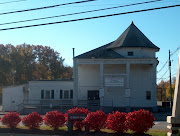
More on Robin Hood Studios in Tyler , Texas with a Louisville Connection

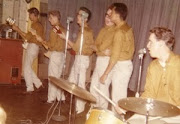
Mouse and The Traps


Thanks to Paul .
 The Louisville connection: the song was a hit in two places: Tyler and Louisville. 
Robin Hood went on to become the sound man for ZZ Top; Mouse and the Traps featured guitarist "Bugs" Henderson, who developed into a noted Texas Blues guitarist. 
From Wikipedia 

Ronnie (Mouse) Weiss and Dave Stanley (both born 1939) were members of a local band named Jerry Vee and the Catalinas (or simply the Catalinas) in 1964[1]. Weiss had also performed on a regional hit single "Lucky Lips" by Steve Wright and The Catalinas that was later released nationally by Dot Records[2].
In this time period, they met Bugs Henderson (or Buggs Henderson), lead guitarist for a local instrumental band, the Sensors. Weiss and Knox Henderson – no relation to Buddy (Bugs) Henderson - co-wrote "A Public Execution" and brought the song to Robin Hood Brians, who manages Robin Hood Studios that is still in operation in Tyler, Texas today. This song – which strongly resembles Bob Dylan's music in the mid-1960s – was released as the band's first single in 1966 under the name Mouse. Jerry Howell (who was also in Jerry Vee and the Catalinas[3]) and Ken (Nardo) Murray joined the group shortly thereafter, and most of their remaining music was released under the name Mouse and the Traps. Besides Brians, other musicians that have played in various incarnations of the band over the years include Bobby Delk, Don (Levi) Garrett and Tim Gillespie.
After releasing several singles on the Fraternity Records label, Mouse and the Traps also recorded two singles for Bell Records that were produced by Dale Hawkins (a member of the Rockabilly Hall of Fame, and known as the writer and original recording artist for the early Creedence Clearwater Revival hit, "Suzie Q"). The band also performed on two of Hawkins' singles and contributed toward his 1966 album on the label, L.A., Memphis and Tyler, Texas[4]. The band broke up in 1969, but all members remained in music except Jerry Howell (who became a Baptist minister).
By 1966, the members of Mouse and the Traps – along with Robin Hood Brians and Doug Rhone – were working with singer Jimmy Rabbitt, who was attempting to launch a band under the namePositively 13 O'Clock. Continuing their Dylan connection, the name is an obvious play on Dylan's hit in the same time period, "Positively 4th Street". A Los Angeles studio session at Hanna-Barbera Records in September 1966 resulted in their only recorded single that included a frantic version of Count Five's "Psychotic Reaction"[5]. However, a planned album for the band never materialized[6].

[edit]Musical highlights

The first single by Mouse, "A Public Execution" was much more Dylanesque than any of their later music and reached as high as #121 on Billboard charts[7]. The single was released on REO Recordsin Canada as well and became a regional hit in Ottawa, where many local bands frequently covered the song[8]. The song mimicked both the musical and lyrical features of Dylan's songwriting (particularly "Like a Rolling Stone") as well as Dylan's singing style to the point of homage or even parody. In the original liner notes of the Nuggets compilation album, Lenny Kaye states of this song: "There are some who say that Mouse does Dylan's Highway 61 period better than the Master himself". Another reviewer remarked: "['A Public Execution'] is to Dylan what the Knickerbockers' 'Lies' is to the Beatles: one of the few rip-offs so utterly accurate that it could easily fool listeners into mistaking it for the original article"[9].
Their second, punkier single, "Maid of Sugar, Maid of Spice", is regarded by many as being their best recording but did not repeat their earlier chart success. The next single was a novelty song that went in a completely different direction. Titled "Would You Believe", it was a take-off on the running gag of that name by Don Adams on the television sitcom Get Smart. A promo exists that shows the artist of this third single as only Mouse.[10] However, a more subdued, later single "Sometimes You Just Can't Win" spent one week at #125 and was a regional hit in Tyler, Texas, Nashville, Tennessee and Louisville, Kentucky.
Allmusic describes Mouse and the Traps as "a fine band who was probably too chameleon-like to find their niche in the national market".[11]
By 1968 Bugs Henderson had formed another band call "The Dream" and was playing night club venues around Dallas.

[edit]Post breakup

The band reformed briefly in 1972 but had a genuine reunion in 1986 with the original members during the Texas Sesquicentennial celebration, with a performance at Flag Pole Hill in Dallas before an estimated 7000 people. A videotape of the 1986 reunion concert is reportedly available from Marc Hood Productions[12].
Ronnie (Mouse) Weiss continues to tour and perform regularly, and often with his former bandmates; he is also a writer and is in demand as a session player.
Bugs Henderson has had a renowned career as an influential blues/rock guitarist with 8 albums to his credit. His 2004 release on No Guru Records, Stormy Love includes a version of "Maid of Sugar, Maid of Spice"[13].
Dave Stanley and Ken (Nardo) Murray, together with Larry Stanley founded the Lone Star Ramblers. They were featured performers at Dolly Parton's theme park, Dollywood from 1988 to 1996, and also appear annually at the Texas State Fair. They have released 10 albums and several video productions and also perform as the Stanley Murray Stanley Band and (at Christmastime) the Strolling Santas.
Jimmy Rabbitt has had a long and varied career as a rockabilly musician. He is also a celebrated Dallas and Los Angeles disc jockey who has had an internationally syndicated radio program, The Rabbitt Report since 1971[14]. (Although the vocalist's name for Positively 13 O'Clock is sometimes spelled as "Jimmy Rabbit", he was evidently not a member of an obscure 1960's garage rock band,Jimmy Rabbit and the Karats). Rabbitt was signed to Capitol Records as Jimmy Rabbitt and Renegade. An album was produced by Waylon Jennings and the band consisted of former Sweathog (band) bass player, David L. Johnson.

[edit]Retrospective albums

The music by Mouse and the Traps and the other associated bands has been assembled by two European record labels on retrospective albums. The first was an LP called Public Execution that was released in 1982 (on Eva Records), which included nearly all of their singles, including the Positively 13 O'Clock record. The LP was re-released on CD by New Rose Blues Records in 1995 with 4 bonus tracks, including both sides of the 45 that was released under the name of Chris St. John. Out of the 25 recordings on their various singles, the only un-reissued tracks are on their final Bell Records single, "Knock on My Door" and "Where's the Little Girl". (The reason that there is an odd number of recordings is that "Cryin' Inside" was released as the "B" side of a 1968 single after its original release in 1967).
Also, in 1997, a CD was released on Ace Records/Big Beat Records with 7 previously unreleased songs that is still in print. Both retrospective albums are comprehensive overviews of the band's career, although the two albums have several tracks that are not in common. Their recordings are also widely available on numerous compilation albums of garage rock music.

[edit]Band members

[edit]Mouse ("A Public Execution")[15].

  • Ronnie (Mouse) Weiss, 12-String Guitar and Vocals.
  • Dave Stanley, Bass Guitar.
  • Bugs Henderson, Guitar.
  • Don (Levi) Garrett, Drums.
  • Randy Fouts, Piano.
  • Robin Hood Brians, Farfisa Organ.

Thursday, April 21, 2011

North in Louisiana


His group, John Fred and the Playboys, was formed in 1956; their first hit single was 1958's "Shirley".
In 1956 one of the members of the group who was a big reader of Playboy magazine suggested they rename the group to “The Playboys”. “Sam Montalbano” the president and owner of “Montel” records who also managed the local Catholic Youth Center would hold dances and sock hops. He booked John and his group and a close friend “Johnny Ramistella” (better known as “Johnny Rivers”) to as many of them as they could make. Sam really liked one of the songs they regularly performed “Shirley” that was composed by both John and “Tommy Bryan”. On 23 September 1958 he took 17 year old John and his band to a recording studio owned by “Cosimo Matassa” in New Orleans. Some previous hits recorded there were “Don’t You Just Know It” by “Huey Piano Smith & The Clowns”, “Tutti Frutti” by “Little Richard”, “Ooh Poo Pah Doo” by “Jessie Hill” and “Jock A Mo” by “Sugar Boy Crawford”. 

“Fats Domino” was at the studio this day and agreed to record a quick version of “Shirley”. John had already sang backing vocals on “My Girl Across Town” by Jazz singer and trombonist “Lester Robinson” on Sam’s “Montel” records. So Sam decided instead of having Fats record “Shirley” he asked John and his band to record it. Before they recorded the song Sam told him he was aware of another group called “The Playboys” and suggested they go by “John Fred & The Playboys”. They also had Fats’ band backing them up on the song. The flip side of the record was “My Love For You” a take off on the #9 pop hit and #1 R&B hit this year by “Chuck Willis” of “What Am I Living For”. “Shirley” was released in December and began getting a lot of airplay on the R&B stations until the disc jockeys found out the group was not black and stopped playing it.

The song debuted on the pop charts on 23 February 1959 and peaked at #82 and was on the charts for only 5 weeks. The song would become a top 10 hit in the UK in 1983 by “Michael Barratt” (better known as “Shakin' Stevens”). John next appeared in March on radio in New York City on “The Alan Freed Show” where he met “Clyde McPhatter”. Their second release in April was “Mirror Mirror (On The Wall)” that had “The Jordanaires” dubbed in with backing vocals but it failed to make the charts. In August they release “Good Lovin’”, written by “Robert Charles Guidry” (better known as “Bobby Charles”) who is said to be one of the founding fathers of swamp pop. This is not the same version that was a #2 R&B hit in 1953 for “The Clovers” a #81 pop hit for “The Olympics” in 1965 or a #1 pop hit for “The Young Rascals” in 1966. 
In 1967, John  Fred and band member Andrew Bernard co-wrote "Judy in Disguise", whose name is a parodic play on the title ofThe Beatles' song "Lucy in the Sky with Diamonds". The song, issued by Louisiana-based Jewel Records on the Paula label( Stan Lewis other label ), became successful, knocking another Beatles song ("Hello, Goodbye") out of the #1 chart position on the Billboard Hot 100for two weeks in January 1968.[3] It sold over one million copies, and was awarded a gold disc.[4] Although Fred actually had a well-rehearsed and talented group honed by years on the road, now known as John Fred & His Playboy Band, he was branded as a novelty act and never had another success. 

Dale and Grace 

In 1963, Dale Houston was working in a bar in Ferriday LA (home of Jerry Lee Lewis and his cousins Micky Gilley and Jimmie Swaggert , Sam "Montel " Montalbano approached Houston about teaming up with a female singer, Grace Broussard (born 1939) from Prarieville near Baton Rouge.Both had been singing in area bars  for several years - Grace with her brother, Van Broussard .The two met and practiced on Montalbano's home  piano for four hours. When Houston began to play an old song written and recorded in 1957 by Specialty Records  performers Don and Dewey— "I'm Leaving It Up To You"

Montel, asleep in the next room, woke up and screamed: “Play it again. That’s a hit!” [3] The song was soon recorded and released locally on the  Montel label 
According to The Billboard Book of Number One Hits by Fred Bronson, the song broke at Top 40 radio station KNUZ in Houston, where it was unanimously voted the "pick hit of the week" by the station's panel of seven deejays. Montel wanted to change the key in which the violins were recorded, but was persuaded by the KNUZ deejays to leave the recording as it was. It was nationally distributed as Montel #921 by Philadelphia's Jamie/Guyden Records after negotiations by producer Huey Meaux.[7][6]
Montel's prophesy was vindicated when "I'm Leaving It Up To You" reached #1 on the U.S. chart, where it remained for two weeks.[8] The song was #1 during the week that Kennedy was assassinated and also reached #1 on the Billboard Adult Contemporary chart.
Houston appeared on Clark's American Bandstand program. In autumn 1963, Houston and Broussard toured with Dick Clark's Caravan of Stars. The Clark caravan, which also included Brian Hyland andBobby Vee, was standing on a street corner on Main Street in Dallas waving at John F. Kennedy on that fateful day. Moments later, the Kennedy limousine turned right onto, ironically, Houston Street, then turned left onto Elm Street, after which the president was killed and Texas Governor John B. Connally was seriously wounded. The group had gone back to their hotel rooms after waving to Kennedy and did not hear about the assassination until several hours later.[7]
The follow-up release "Stop And Think It Over" went to #8 in 1964. However, the popularity of The Beatles, combined with personal problems between the two performers, Broussard's homesickness, and a serious illness which landed Houston in the hospital, caused the duo to separate in 1965. Grace returned to singing with her brother.

The Uniques with Joe Stampley at the helm  were based out of Shreveport, and began performing in Arkansas, Louisiana, and Texas. In 1965, The Uniques recorded, "Not Too Long Ago", the first national hit for Paula Records. One year later, they followed with "All These Things".. They were active from about 1965 to 1970, recording most of their material at Robin Hood Studios, located in Tyler, Texas.


Louisville Connections
The song "All These Things" was written by a newscaster in Louisville, Kentucky, named Tom Maxedon, written as a love song for his wife Carrie. In a time of need for supplemental income, Maxedon sold the rights to the song for $200 to an unknown producer making his rounds around the radio stations. The song hit the charts in 1966, and Maxedon's home station, WAKY in Louisville, began playing the song in their regular rotation in respect to Maxedon. "All These Things" became a nightly staple on WAKY, regularly one of their top-requested songs each night for over 10 years. The song stayed in the top 40 for just a few weeks nationwide, but was a local phenomenon in Louisville for over a decade.( So says Wikipedia )


Toussiant Mccall 
and yes it was recorded in his living room in Monroe LA .
Released on Ronn Records by Stan Lewis 
Mr Mccall in  1988 made a cameo appearance in the John Waters film, Hairspray, lip syncing to his hit song. ( clip is there to the left )
 and you ask does Ruth Brown speak French , just like everybody else in this clip ) N'est-Ce Pas  ?


Swamp Pop Music Links 
http://theswamper.tripod.com/


For another time 
Louisiana Hayride was a radio and later television country music show broadcast from the Shreveport Municipal Memorial Auditorium in Shreveport,Louisiana, that during its heyday from 1948 to 1960 helped to launch the careers of some of the greatest names in American music. Elvis Presleyperformed on the radio version of the program in 1954, and made his first television appearance on the TV version on March 3, 1955.

Wednesday, April 20, 2011

Moving South - Swamp Pop

Thanks to 9 years in Dallas , I was fortunate to get to know a lot about Louisiana ( known by some Texans as Lousyana , an opinion not shared by your humble correspondent ) .


From Wikipedia ( Find out more here http://en.wikipedia.org/wiki/Swamp_pop)


The swamp pop sound is typified by highly emotional, lovelorn lyrics, tripleting honky-tonk pianos, undulating bass lines, bellowing horn sections and a strong rhythm and blues backbeat. It is exemplified by slow ballads like Cookie and the Cupcakes’ “Mathilda” (recorded 1958), considered by many fans as the unofficial swamp pop “anthem.” But the genre has also produced many upbeat compositions, such as Bobby Charles’ “Later Alligator” (1955), popularly covered by Bill Haley & His Comets.[2]
During the genre’s heyday (1958-1964), several swamp pop songs appeared on national U.S. record charts. These included Jimmy Clanton's “Just A Dream” (1958), Warren Storm’s “Prisoner’s Song” (1958), Phil Phillips’ “Sea Of Love” (1959), Rod Bernard’s “This Should Go On Forever” (1959), Joe Barry's “I’m A Fool To Care” (1960), and Dale and Grace's “I’m Leaving It Up To You” (1963).[3]
In swamp pop’s south Louisiana-southeast Texas birthplace, fans regarded many songs that never became national hits as classics. These include Johnnie Allan’s “Lonely Days, Lonely Nights” (1958), Buck Rogers’ “Crazy Baby” (1959), Randy and the Rockets’ “Let’s Do The Cajun Twist” (1962), T. K. Hulin’s “I’m Not A Fool Anymore” (1963), and Clint West’s “Big Blue Diamonds” (1965), among numerous others.[4]


Here are some of the sounds you may already know and some you may have missed

Bobby Charles ( Robert Charles Guidry )


Cookie and The Cupcakes ( AKA The Twilights)


Phil Phillips
John Phillip Baptiste, 14 March 1931, Lake Charles, Louisiana, USA. Phillips wrote his one hit, "Sea Of Love", to impress a would-be girlfriend in 1958. He was introduced to producer George Khoury, who recorded the song at the Goldband Recording Studio and released it on his own label, credited to Phil Phillips And The Twilights and you ask who were the Twilights .
 Look no further than the Cookie and the Cupcakes augmented by Katie Webster on piano .


Katie Webster
The piano player on Sea of Love
A live performance - Terrific Musician


T K Hulin


Rod Bernard

From New Orleans
Earl King


Clarence "Frogman" Henry
A Bobby Charles Song


More later and a trip through Louisiana and up to Shreveport for Jewel records and even a look at the Louisiana Hayride .

Thursday, April 7, 2011

Motown Sound Coming at you from North England as Northern Soul The Debonaires

It takes many twists and turns to make it in the music business . This great Motown sound shows just we missed in 1964 with only what  top 40 let us hear . Northern Soul is dance music and "Loving You Takes All of My Time " has it all .


From allmusic.com by Andrew Hamilton


The Debonaires were cousins, Joyce Vincent Wilson and Telma Hopkins, and supposedly there were other members who remain unknown. These unknowns are possibly some of the Adorables who recorded for Golden World records before the Debonaires. A feasible surmise since two Adorables -- Pat Lewis and Betty Winston -- helped co-write the Debonaires' second single, "Eenie Meenie Gypsa Leenie." Wilson and Hopkins later sung with Tony Orlando, a pop group that notched three number one hits. 


They were high school students when Golden World released  "Please Don't Say We're Through" b/w "A Little Too Long" in 1964  Unfortunately, it didn't get exposed outside the Detroit area. The writing, producing, and singing Hamilton Brothers -- Bob, Albert,Eugene, and Freddie Gorman (also a brother) -- handled both sides. Big things were expected, as the same production crew had recently scored a gold disk on the Reflections ("Just Like Romeo and Juliet"). "Eenie Meenie," the second single, came out in August of 1965, but by this time Golden World was cold as a deep freezer. Its subsidiary Ric Tic was doing much better with tunes by Edwin Starr, the Fantastic Four, J. J. Barnes, and the Detroit Emeralds. Golden World apparently released Debonaires' singles as afterthoughts because the next one didn't appear until nearly a year later on June 6, 1966. "How Is Your New Love Treating You," written by Linda Bunton and Joanne Jackson, who wrote under Joanne Britton, rates as one of their best, but it never got pushed.Probably because label owner, Ed Wingate, was negotiating to sell the whole ball of wax to Motown


 . A final Golden World single "C.O.D. (Collect on Delivery)" released in October of 1966 stiffed as badly as the others. They surfaced later that year on Solid Hit records with "Headache in My Heart" b/w "Loving You Takes All My Time," produced by George Clinton.


 Solid Hit's typist blew the spelling and the single is credited as by the Debonairs; she missed the E, but it didn't matter, it didn't sell either. They tried one last time with "I'm in Love Again" before closing the book on the Debonaires. 

Motown artists by default when Wingate sold his masters and publishing to Berry Gordy, Hopkins and Wilson began singing on sessions that proved more lucrative than being recording artists. They remained unknown until Tony Orlando hit as a solo act with "Halfway to Paradise" and "Bless You," both recorded by Jimmy Ruffin on his Top Ten album, and cut "Candida." Orlando worked for April-Blackwood Music Publishing at the time. Not wanting his moonlighting known, Bell Records credited the song as Dawn, but there was no Dawn. Hopkins' and Wilson's voices didn't appear on record with Orlando until the sixth single. "Knock Three Times," the second Dawn single, rocketed straight to number one; two million sellers in a row are hard to deny or ignore. 

April-Blackwood was Columbia Records' publishing wing; Bell Records was a competitor. To appease his bosses, Orlando insisted that some April-Blackwood titles appear on Dawn's album. The group became Tony Orlando & Dawn after the fourth single. The success prompted Orlando to quit his job and prepare to tour with Dawn, but there was still no Dawn. A producer friend acquainted Orlando withHopkins and Wilson; the trio jelled immediately. A remake of Del Shannon's "Runaway" marked Dawn's first appearance on record withOrlando. 

After Dawn, Telma Hopkins carved a highly successful career as a television actress appearing and starring on too many shows to mention, something she still does. Joyce Vincent Wilson became a housewife. Tony Orlando and Dawn unite from time to time for brief appearances, but the Debonaires were forgotten almost before they started .Oh and George Clinton , here's  a little more of him . Get Down  

Thursday, March 17, 2011

Remembering The Teen Clubs and Teen Dance Venues 12/31/10 New Years Eve

My thoughts spin back to those days, when the earth was still cooling.
Like many of my contemporaries, I was  prepping for another New Year’s Eve… the annual New Year’s Eve gig ( for a horn player ( ed note :saxophone ) , this was making sure, inter alia ( ed note : among other things ), that you had the right number of reeds that were shaved down to just the right level, that the band’s “uniform of the evening” was cleaned and pressed, and that one’s weejuns were highly polished ). This was always  a big night for a number  of reasons, not the least of which was the fact that, on NYE, the money was usually no less than 2X to 3X our usual rate!

Thoughts of those days, for some reason, lead me to think about how important Catholic teen clubs were to us, especially early on, when, like so many others, we were just coming out of the blocks. Drive around Louisville, especially in many of the older neighborhoods, and it feels like about every 10 blocks or so, you spot another parish church. Almost every one of those parishes had its own teen club, with names like SaRaTeen  ( St. Raphael’s ), ChaLaLou ( Church of Our Lady of Lourdes) and HoFa ( Holy Family ). OK, OK, so maybe the money wasn’t all that great ( or even all that mediocre, come to that ), but each club was a venue…an opportunity… for aspiring singers and their musicians to get in front of a live audience of their peers, to conquer their fears and to hone their skills.

So, imagine if Louisville had been, dare I say, “less Catholic”. Sure there’d have been the VFW, the Highland Post, FoP, Gypsy Village and a few others, but ( and here, admittedly, memories are a bit faded ), I recall those venues as more the “big time”, after a band had a following, and, in some  cases, even a record or two. 

OK, OK, not so much the Pope, then,  or even the Archbishop for that matter, but all those parish priests and nuns who gave the “go ahead” to their teen committees to hire the young hopefuls to perform in their clubs…they ought to belatedly recognized and thanked. There probably are other towns in America that provided similar opportunities, but it strikes me that what we had in Louisville was particularly nurturing and rewarding.

Tim Hughes
An Original Member of the Monarchs

Wednesday, February 16, 2011

Rock and Roll Hall of Fame Inductee - Darlene Love - More Girl Group Sounds

Here is the NPR story on Darlene Love RNRHOF 


From the youtube poster  Check it out for more

Written by Gene Pitney, and already passed on by The Shirelles, Phil Spector had wanted this for his girl group The Crystals who were on the east coast at the time. As the story goes, Spector had turned to Gold Star studios in LA because there, he could better develop his sound and couldn't wait for The Crystals to fly from New York; he had Darlene Love and The Blossoms record it instead. The record went to # 1 in 1962, but was released under The Crystals name. The Crystals were forced to celebrate a false victory and The Blossoms never fully got their dues which is why I made this video as a tribute to them. Aside from their work on the rock program "Shindig," The Blossoms were actually very established as a premiere backing group- many articles on them fail to include that they have backed several major acts live, such as Marvin Gaye (in The TAMI Show 0:47) and Elvis Presley (in his comeback special 1:33). They have backed numerous others in the studio. A lot of people complain about performances of this by the new Crystals group that Dee Dee Kennibrew (an original Crystal) started. But anyway, it's funny how people have such huge issues with that when it was only released under The Crystals' name while the real Crystals didn't even sing on it.


Leslie Gore from the TAMI Show - if you guessed the Blossoms doing the background - you are a winner 


Girl Group Movie 5 Parts Each part 15 minutes 
Part 1 

Part 2  (opens with the Exciters - they opened for the Beatles in Indianpolis on Sep 3 1964 , your blogger was there !)


Part 3


Part 4


Part 5

Friday, February 4, 2011

Girl Groups of the 50's and 60's you may have missed

The Gales

Note - listen for the key changes

The Antwinettes

Sax break worth rippin off . How many mics do you think they had ?
The Sharmeers


From Philadelphia on Red Top

These guys were on Red Top (Jalynne was one of their labels ) as Tony and the Twilighters and the title has girl in it .


 They were also know as Anthony and the Sophomores


Back to Girls on Red Top
The Quintones ( yes there was one guy in the group )


Find this and more at Dennis Bell's Golden Oldies